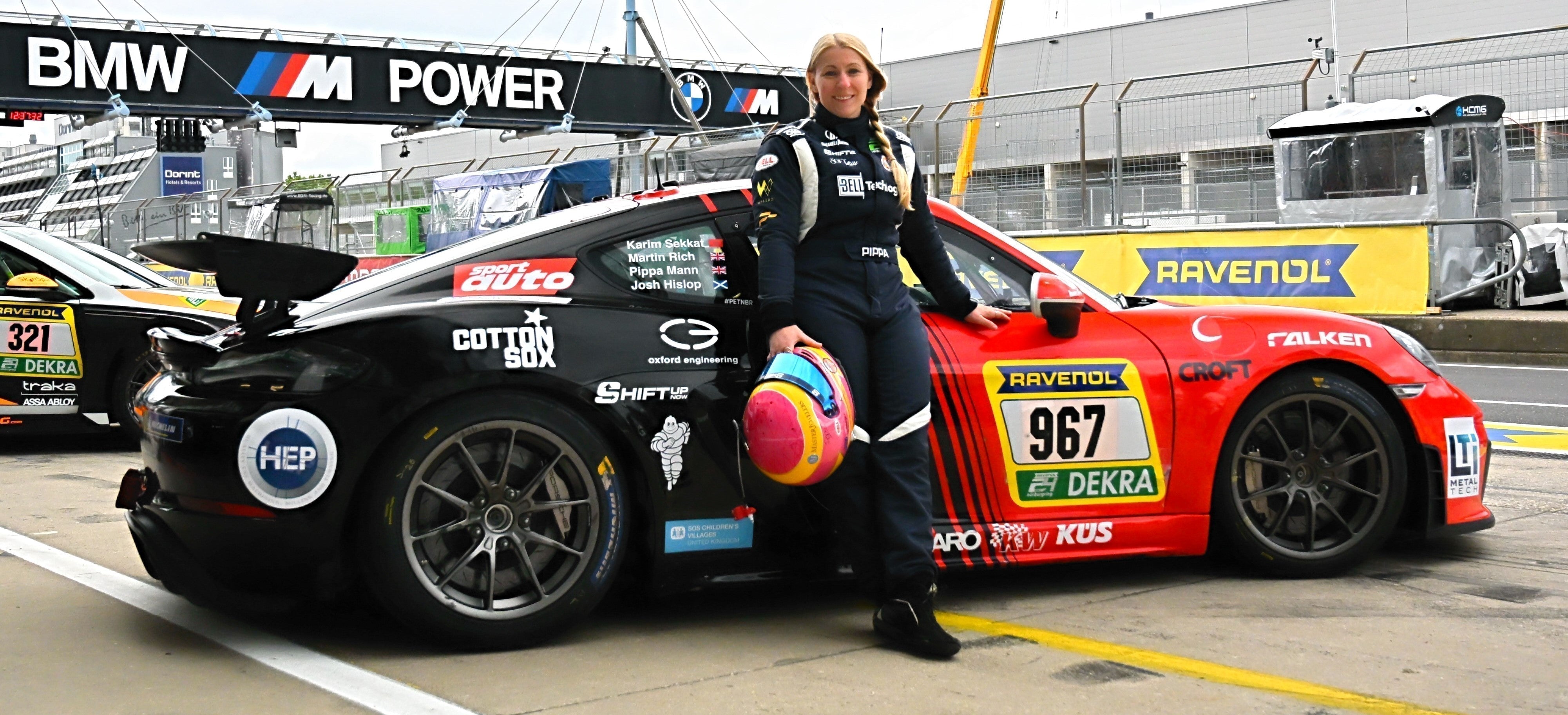
Behind every industry still finding its footing on equity are women who refused to wait for permission, who built the career, then built the door for the next woman behind them. Motorsport is one of the last major sports where funding, opportunity, and respect still lag far behind, and few people understand that gap, or have worked harder to close it, than seven-time Indianapolis 500 qualifier Pippa Mann.
In this conversation, Mann talks candidly about what it really takes to compete at the highest level as a woman in a field not designed with her in mind, the sisterhood she's found among fellow female racers, and why she founded Shift Up Now, an organization that's already written three-quarters of a million dollars in grants to help other women get behind the wheel.

1. On your path into racing
You've qualified for the Indianapolis 500 seven times. Take us back to the beginning. When did you know racing wasn't just a passion, but a career you were going to build?
I grew up in a family whether my father was a race fan, but we had no other connection to the motorsport world. However I loved playing with cars, riding in cars, watching racing on TV, and then in person from a very young age, and I was always agitating to try and find a way to get behind the wheel myself. For my 13th birthday I received my first ever competition racing kart, and from that moment onwards I was pretty obsessed with building a career in this sport. To give you an idea how determined and driven I was, despite the fact most kids start racing at around 8 years old, and the fact I didn’t start until I was 13, by the time I was 17 I was living in Italy, racing karts at a European and World Championship level…
Was there a person early on who either opened a door for you or tried to close one? If you could go back and tell yourself something at the start of your career, what would it be?
As a woman in motorsport, there have been both many people over the course of my career who have tried to slam the door in my face, and allies who have stood beside me to help me open another one. The first set of people only served to make me more determined, but I would never have made it to where I am now without those early allies who quietly stood beside me in the face of adversity and believed in me. My younger self had no idea how tough this life and career was going to be to build, but I’m pretty sure she wouldn’t have listened to me if I’d tried to give her that advice at that time…! However that’s the basis of the same attitude and determination that actually allowed me to rise and compete at the levels I’ve had the opportunity to.
2. On competing in a male-dominated field
Motorsport has historically been built around men — the teams, the sponsorships, the culture. What has it actually taken, day to day, to compete at the highest level in a field that wasn't designed with you in mind? What's something people assume about being a woman in racing that isn't actually true?
One of the biggest issues women in all sport face is the lack of funding for women in sport in general. Women in sport receive less than 10% of the total global sports marketing spend across all sports, but a sport like motorsport often isn’t factored into these conversations because it’s a sport where men and women can, and do, compete as equals when given equal opportunities and equal funding. However motorsport is also a very expensive sport, where enough sponsorship is a high barrier to being able to participate and compete, and whilst raising enough money to be able to race is a problem all racers have to solve, being a women in this space can still create additional barriers to securing enough funding to compete.
The vast majority of funding that comes into motorsport is from very traditional companies where the C-Level executives who make the decisions are still mostly men of a certain generation. They wonder whether we can really drive, and at the same time may of them are more interested in how we look outside of the race car as opposed to how we’re able to perform inside the race car. I’ve seen female racers paid to take part in advertising campaigns where a company would like to promote it’s support of women in the sport, but then the brand won’t spend enough money to sponsor them. I’ve seen companies who spend millions in motorsport already participate in women’s sports and make grand claims as to how close their equity of spend is, but they will work their statements carefully so that only women in women’s sports are included, and not women in motorsport…
There is a lot of research, funded by various groups including “More Than Equal” out of the UK, and the Wasserman Group here in the US that shows that female athletes understand this funding gap, and work hard to build their social media presence, and audience connection, and as a result their audience is far more likely to support the brands who support them, which is an additional source of revenue for us… But in motorsport we don’t just need the ability to earn enough money to live, we need to have enough sponsorship to actually be able to race, because unlike in other sports, the vast majority of the drivers are responsible for there being enough money for the motorsport program to function and run.
The most successful women in motorsport at the highest levels have been the women who have found other women, and other female owned / targeted brands to support them. The Iron Dames was a fantastic program that ran for years in Europe, created and funded by Deborah Mayer, where all female driving teams competed together at the highest levels of sports car racing - and stood on podiums and won races. F1 Academy has created an opportunity for young female racers to try and get their foot on the ladder and create a name for themselves in the sport, so they can hopefully find the funding to continue, and that was created by Susie Wolff. Sabré Cook is an American racer competing in Porsche Carrera Cup in the US, and her primary sponsor is a hair care brand called privé, founded by a female business woman, and amateur racer Shay Hoelscher. Samantha Tan has a partnership with L’Oreal - who seem to be slowly stepping into a space where they are starting to work with a few more female racers alongside working with women in other sports.
Personally, when I raced in Germany at the 24 hour race this year, 50% of my funding came from more traditional sponsorship, and (male) allies who own or are CEOs of companies who believe in me as a racer, that associating with me elevates their brands, and whom believe in equity and funding women in sports, and 50% came from women - women owned companies, two amateur female racers who have their own money to comet, and who stepped up to help me, a female owned brand that supplies the fireproof base layers I wear under my branded race suit… As more women are stepping up to support, and stand with other strong women, we’re starting to see more women have the funding and opportunities to succeed.
It’s an interesting irony that most people think it’s easier for women than men to raise the money to compete… Myself and all of the other female racers out there can not only promise you that isn’t true, we can show the you data, stats and research that prove it.
Has that changed at all since you started, or does it just look different now?
Women supporting women is a theme that has changed in the sport not just from the funding side, but also from a sisterhood side. When I was young, “drive like a girl” was an insult, and myself and the other women competing at the same level as me were effective pitched “against” one another because only one of us could be “good enough to make it”.
I’m proud to say we’re in a different place now, and the vast majority of women in the sport support one another, we root for one another, we want to see one another succeed. We’ve formed friendships, we offer one another advice, we love racing together as team-mates. Sure, we also love beating one another on the race track, but our goal is when we’re all out there racing and fighting for the podium positions, and the win, and seeing who can come out on top on any given weekend at any given track.
It’s also cool to se the way the paddock has changed. Not only are there more women working in more roles in motorsport than ever before, but we, as female drivers, are more accepted by the vast majority of teams and our competitors as racers first. When I was younger I constantly had to prove I could drive before I was taken seriously in every environment, and I was met with skepticism, and sometimes antagonism from within my own team, and the guys I was racing with definitely did not want “to be beaten by the girl”. Those people still exist, both inside and outside the paddock, but now they’re the mostly the minority, and they stand out was the walking red flags they are.
3. On founding Shift Up Now
Your company, Shift Up Now, opens doors for women in motorsport, from funding to sponsorship to opportunity. What was the gap you saw that made you say?
Someone has to build this — and it might as well be me. When I was competing at the Indy 500, I used to believe that struggling to find the support to compete was a “me” problem. If I could somehow be faster with no practice or seat time. If I could somehow do better in the equipment I had. If I could somehow prove my engineers loved working with me, and thought I could drive a race car. Maybe if I could improve my social media, and my website. Maybe if I could just get my deck in front of the right people. Maybe if I just invested money I didn't have in a better marketing deck…
The more women I connected to in the sport, the more friendships I formed, the more I realized the story was the same across all forms of motorsport, and all levels. And then in 2020, when the Pandemic hit, and my sponsor for the 2020 Indy 500 pulled out in the uncertainty of whether there would even be a race or not, I had time on my hands.
At the same time I was part of an organization called “
Shift Up Now”, founded by a female amateur racer. She was “collecting” racers like me, who desperately needed help and money, and who wanted to be associated with a sisterhood of other female racers, but the organization was very small, and things were stalling out. In the summer of 2020, the Founder passed Shift Up Now onto me, and then we spent the next 6 months building it into the first version of what you see now.
We are an organization that works to help fund female racers, and help them close the funding gap. We had a small for profit business that deals with traditional sponsors, hosts our website, sells merchandise that says things like “Drive Like a Girl, Race Like a Girl, Win Like a Girl”, and we have a small paid membership fan club that helps us keep the wolf from the door, and keep the business alive. However the biggest task of our for profit business is to absorb as many of the costs as possible, so that our Foundation has as few overheads as possible, and can write as much money in sponsorship grants for racers as possible!
I helped found our Foundation, which got its 501c3 status in November of 2022, and this is our biggest vehicle for helping female racers close the funding gap. We’re a small organization, with an all volunteer board, and so far we’ve written 3/4 of a million dollars in Grants for female racers to help them compete at professional and semi professional levels in motorsports. We’re no one’s biggest sponsor, not a title sponsor, but we’re here to help the women who are already putting in the work, showing the talent on the race track, putting their programs together, and working to find the supporters to make it happen.
What was the first real win, the moment you knew it was working? What part of building it looked nothing like you expected?
I think the first real win was realizing that right now, we’re working towards chasing a goal of having written $1,000,000 in Grants fr racers before our 5th birthday in November of 2027. That a small, scrappy, volunteer board has gotten this far in just a few years in quite a feat, but when we stack the numbers against the actual cost of competing in motorsport, we still have a very long way to go. The big goal would be to one day get to a place where we have so much support that we can write around $1,000,000 in Grants for racers every year… Admittedly that’s a big goal, and a big dream, but the 13 year old who started racing karts, and rising against the odds wasn’t going to be told no, and I’m not ready to hear that answer either.
4. On wearing KiraGrace
Your life moves between the track, travel, and everything in between. Why KiraGrace?
At the race track I’m dressed in a “uniform” the entire time I’m not in my race suit. This normally consists of black pants, shorts when working for a brand, and jeans when working for myself or a private customer, a branded polo shirt or t-shirt and sneakers. Probably partly as a reaction and rebellion to this, my style outside of the race track is much more feminine. I wear a lot of florals - whether tops, dresses or skirts, and I’m the girl who remembers the fashion rule about taking one accessory off before leaving the house, looks it in the eye, and adds one more. I struggle sometimes with what to wear to a business meeting, or when giving a formal speaking engagement keynote speech, but I will show up to our dinner reservation rocking a combination of clothes you probably haven’t seen together before, and totally convinced I can pull it off!
My introduction to KiraGrace was the
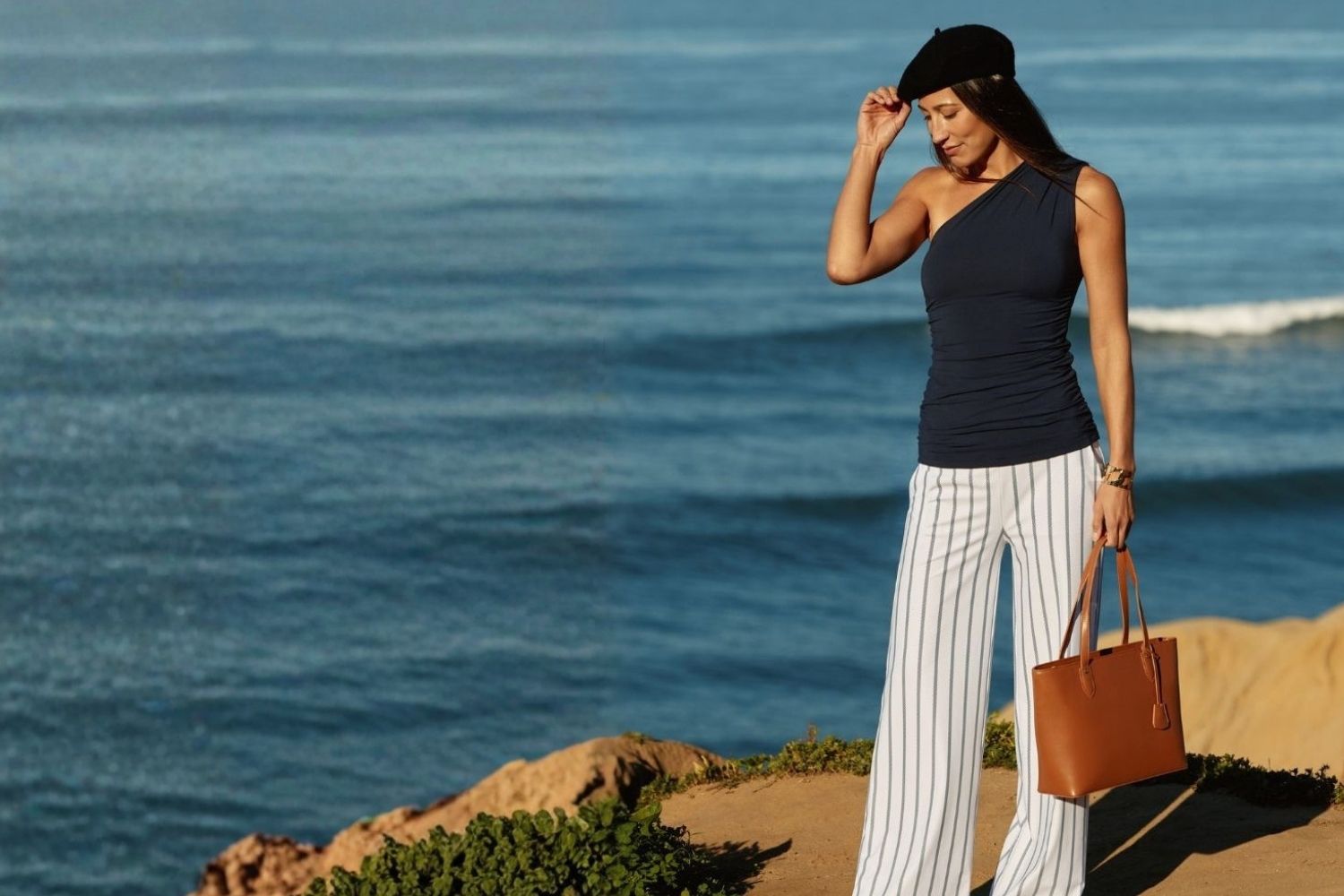
Portofino floral pants. I wanted an alternative to a skirt, or my skinny jeans, and those just felt like me. Plus they’re light weight enough to wear here in Indianapolis in the summer when it’s a millionty degrees outside, and I love the fact I can move so easily in them. So far every time I’ve worn them, at least one of my friends has asked where I got them!
Is there a piece you reach for on race week specifically, and what makes it work for that day? How does what you wear off the track shape how you feel on it?
There isn’t a piece I reach for specifically on a race weekend, but the new
Flawless Pants are fantastic for travel days when I want my clothes to move with me, be comfortable on flights, and not look completely rumpled at the other end, and they’re also quickly becoming one of my favorite pairs of track pants when I’m required to wear black pants for work by a brand. Again, having clothes that move with me, breathe, and look smart all day makes my life so much easier - and frankly finally having track pants that feel like they fit me properly, and feel like I would literally have chosen for myself if I didn’t have a uniform I had to wear, definitely makes a difference to the quiet confidence in how I feel about myself whilst I’m at work.